Short answer: Crittall-style windows do not have one real price. A small fixed steel-look screen, a run of opening aluminium lights with a true grid, and genuine steel replacement are different products. The cost sits in the bars, the vents, the glass and the fitting — not in a width times a height from a web calculator.
The short answer
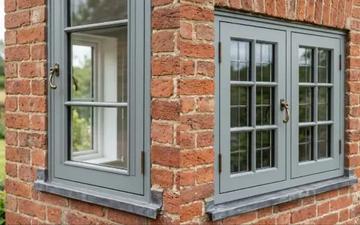
“Crittall” is often used for any black grid. That word is doing too much. Real steel windows, thermally broken steel-look aluminium, and a normal window with glue-on bars can be photographed to look similar and priced nothing like each other. If a national advert offers a tiny number for “Crittall-style windows”, it is selling a starting sketch, not your elevation.
We price this work across Staffordshire and Cheshire from a drawing of the grid. Until the grid exists, anyone’s total is a mood. We would rather explain the drivers than invent a figure that expires at the survey.
What moves the price
The system comes first: true steel, or aluminium that is designed to look like steel, or a decorative bar. Then the grid: ten small panes are not one pane with a bar stuck on. Each light can be fixed or opening. Opening lights need hinges, stays and a way to lock. A grid of twelve with four openers is a different factory job from a grid of twelve fixed lights.
Size still matters, and shape matters more. A simple rectangle is the reference. Arches, sloping heads and doors inside the screen change the fabrication. So does colour, although black and dark bronze are the usual request. Dual colour, bronze hardware and a low threshold on a door all add lines. Glass specification — safety, solar control, acoustic — adds more than people expect because there are so many small units, or one big unit pretending to be many.
Installation is not a delivery charge
Slim frames are less forgiving of openings that are out of square. A period reveal, a steel lintel, or a bay that has moved will take time. Internal screens need a designed fixing to floor and ceiling, and sometimes fire or guarding requirements that a window quote does not include. External windows need cills, damp proofing and making good that a supply-only price ignores.
Access, scaffold and the cost of working in an occupied house are the same realities as any other replacement, sometimes more so because the frames scratch and the bars must line through. Protection and careful setting-out are part of a serious price. A cheap fit that leaves the grid running downhill is not a bargain you will keep.
How to read two quotes
Lay them side by side and mark: named system, which lights open, glass, colour, supply-only or fitted, and whether the drawing is the same drawing. If one quote has applied bars and the other has a real muntin grid, the cheaper one is a different window. If one includes scaffold and the other assumes you have a builder, add the builder back in before you feel pleased.
Lead time on specialist steel can be long. A price that only holds for two weeks on a product that takes months is a sales tool. Ask what is fixed at order: the grid, the sizes after survey, the deposit, and who remakes a damaged bar.
Where people overspend and underspend
Overspend: specifying every light as an opener, specifying true steel where a thermally broken aluminium grid would satisfy the house and the planner, and putting a dense grid on a elevation that wanted one slim picture window. Underspend: buying stick-on bars, skipping safety glass beside a door, and ignoring drainage and threshold on a steel-look door because the photo was taken on a dry day.
Internal screens are a frequent overspend in the wrong direction too — people buy an external window system for a room divider and still do not get the fire or acoustic performance they assumed was included. Say what the screen is for.
A sensible way to budget
- Separate fixed screens from opening windows
- Draw the grid before you ask for a total
- Name steel or aluminium
- Include glass, colour and installation
- Include access and making good
- Keep a contingency for openings that are out of square
- Do not use a national “from” price as your budget
When to book a survey
Bring the photograph you actually want and, if it exists, the opening. We will tell you whether you are looking at steel-look aluminium we can specify cleanly, or at true steel that needs a specialist route and a different budget conversation. We will also tell you if a simpler slim frame, without a fake grid, is the better-looking spend.
The survey is what turns “what do they cost?” into a schedule. Until then, the honest answer is that the grid and the contract decide, and a single headline would be a sales number, not a guide.
Questions we hear on survey
Why won’t you give a price per window online?
Because a 900 mm fixed light and a 900 mm opening grid are not the same window. Online prices train you to ignore the thing that costs the money.
Is steel-look cheaper than real steel?
Often, and it is a different product. Compare them only after both are named. Sometimes real steel is what the building requires, and the cheaper look-alike is a false economy at planning.
Can I do the front in Crittall-style and the back in casement?
Yes. Many houses should. The front might be the only elevation that wants the grid. Write the split so the glass specification does not accidentally differ in a way you will see.
Do black frames cost more?
Dark colours can be a cost against a white base system, and on steel-look they are often the standard. Ask. Do not assume black is free just because every photo is black.